
Volkswagen’s unveiling of the new Gold GTI Edition 50 is a timely reminded of how the GTI badge has travelled. With more power, sharper chassis tuning and a price nudging £50,000, the modern GTI is clearly aimed at committed enthusiasts with new care budgets.
But launches like this also prompt a more interesting question. If you still value the original GTI idea, usable performance, everyday practicality and understated appeal…where does that value now sit?
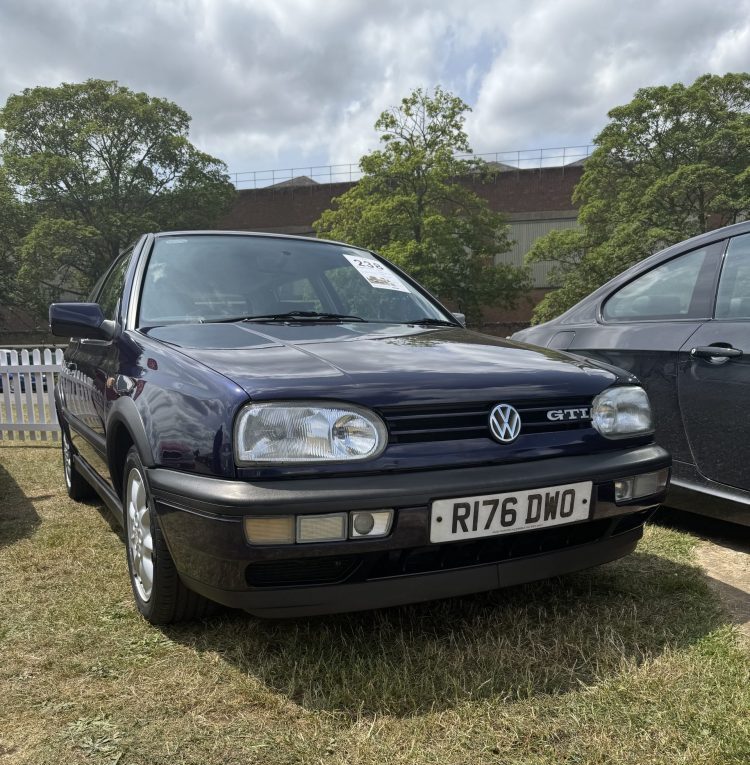
Increasingly, the answer may lie with one of the most overlooked GTI generations of all – the Mk3.
A GTI caught between eras
When the Mk3 Golf GTI arrived in the early 1990’s, it faced an unenviable task. The Mk1 had created the hot hatch template, the Mk2 had refined it to near perfection. Against those icons, the Mk3 was judged harshly.
It was larger, heavier and less raw. To many critics, it felt like a dilution of the GTI ethos rather than an evolution. That perception stuck and the Mk3 never quite escaped it.
With hindsight, that judgement feels incomplete. The Mk3 GTI wasn’t trying to repeat the past. It was signalling where the Golf and the wider hot hatch market was heading towards, refinement, safety and genuine everyday usability.
More comfort than legend by design
Unlike the Mk1 and Mk2, the Mk3 leaned into comfort. Better soundproofing a more settled ride and a more substantial feel made it less frenetic but far easier to live with. In period, that made it feel less exciting. Today, it makes it quietly relevant.
Engine options reflected this shift:
- 2.0 litre 8 valve
- 2.0 litre 16 valve
- Range topping 2.8 litre VR6
The VR6 has become the headline act and commands a clear premium but for real world use, the 2.0 litre 8 valve remains particularly compelling. Its accessible torque suits modern roads better than the peaky 16 valve and it feels relaxed rather than strained.
Mechanically, all three engines have proven durable, provided maintenance hasn’t been neglected.
Buying reality: what actually matters
Condition matters far more than specification. rust is the single biggest concern, particularly on cars that haven’t been garaged. Sills, wheel arches and rear quarters deserve close inspection. Poor accident repairs should all be taken seriously.
Water ingress is another known issue.
Check:
- Front footwells (often failed door seals and membranes)
- Roof lining, especially around sunroof
- Rear light clusters and boot areas
Interiors generally age well but look out for sagging seats and worn bolsters.
The driving position feels slightly higher than the earlier Mk2 GTI, yet the fundamentals remain strong, clear Volkswagen instrumentation, a positive five-speed manual gearbox and a solidity that feels convincing decades on.
How it drives and why that’s the point
Is the Mk3 GTI as sharp as a Mk2? Probably not. Even committed Mk3 fans tend to accept that earlier Golfs feel lighter and more agile.
But context matters.
The Mk3 trades immediacy for composure. It feels planted, predictable and comfortable, qualities that suit modern traffic and longer journeys. In that sense, rather than chasing nostalgia, the Mk3 quietly defined the modern GTI formula.
Approach it expecting a Mk1 with airbags and you’ll be disappointed. Approach it as a usable performance hatch with emerging classic appeal and it makes far more sense.
The market story hiding in plain sight
Parts availability isn’t a concern. Volkswagen’s aftermarket support remains strong and specialist knowledge is easy to find.
What’s more interesting is pricing.
Despite rising values across the wider hot hatch market, Mk3 GTI prices particularly five door cars remain largely flat. Auction activity suggests interest without speculation, while the number of good cars continues to fall.
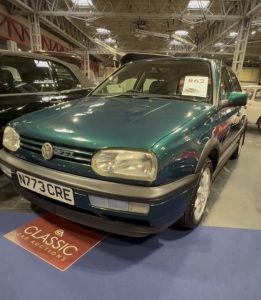
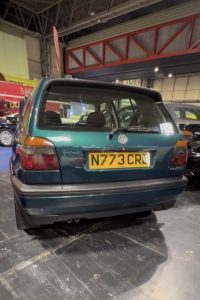
A recent example underlines this point. At last year’s Classic Sale at the NEC Classic Car Show, a 1995 Volkswagen Golf Mk3 GTI 5 door showing 85,000 miles and far from perfect condition wise sold for £2,250.00. It wasn’t a concours car or a low milage outliner but a usable, honest example priced accordingly and it still found a buyer.
That result neatly illustrates where the Mk3 GTI currently sits in the market. Accessible, unspectacular on paper and largely free from speculative pressure.
We’ve seen this pattern before. In the early 1990’s a work colleague of my father sold a Mk1 Golf GTI Campaign for under £1,000 a decision he later regretted as values accelerated. Both the Mk1 and Mk2 were once dismissed as old hatchbacks before sentiment, scarcity and perspective caught up.
Why the Mk3’s moment may be approaching
What sets the Mk3 apart today is usability. Unlike previous GTIs it doesn’t feel precious. You can drive it in the winter, in the rain or snow, sit in traffic and use it regularly without feeling like you’re eroding something irreplaceable.
As classic car ownership becomes increasingly polarised between garage kept investments and disposable modern classic cars, the Mk3 GTi occupies an increasingly rare middle ground. It’s old enough to feel special but modern enough to live with.
That combination is becoming harder to find.
Why now? in brief
- Values remain flat while supply shrinks
- Usable classic GTI with strong parts support
- History suggests sentiment changes quickly
About the author
Sheridan is an independent automotive editor and founder of We Blog Any Car. With over 30 years’ experience in the motor industry, his work focuses on market insight, buying signals, and real world automotive analysis, with a particular interest in the modern classic market.
Previous Volkswagen Golf GTI news
VOLKSWAGEN GOLF GTI ANNIVERSARY EDITION 50. Short new car news.






Leave A Comment